
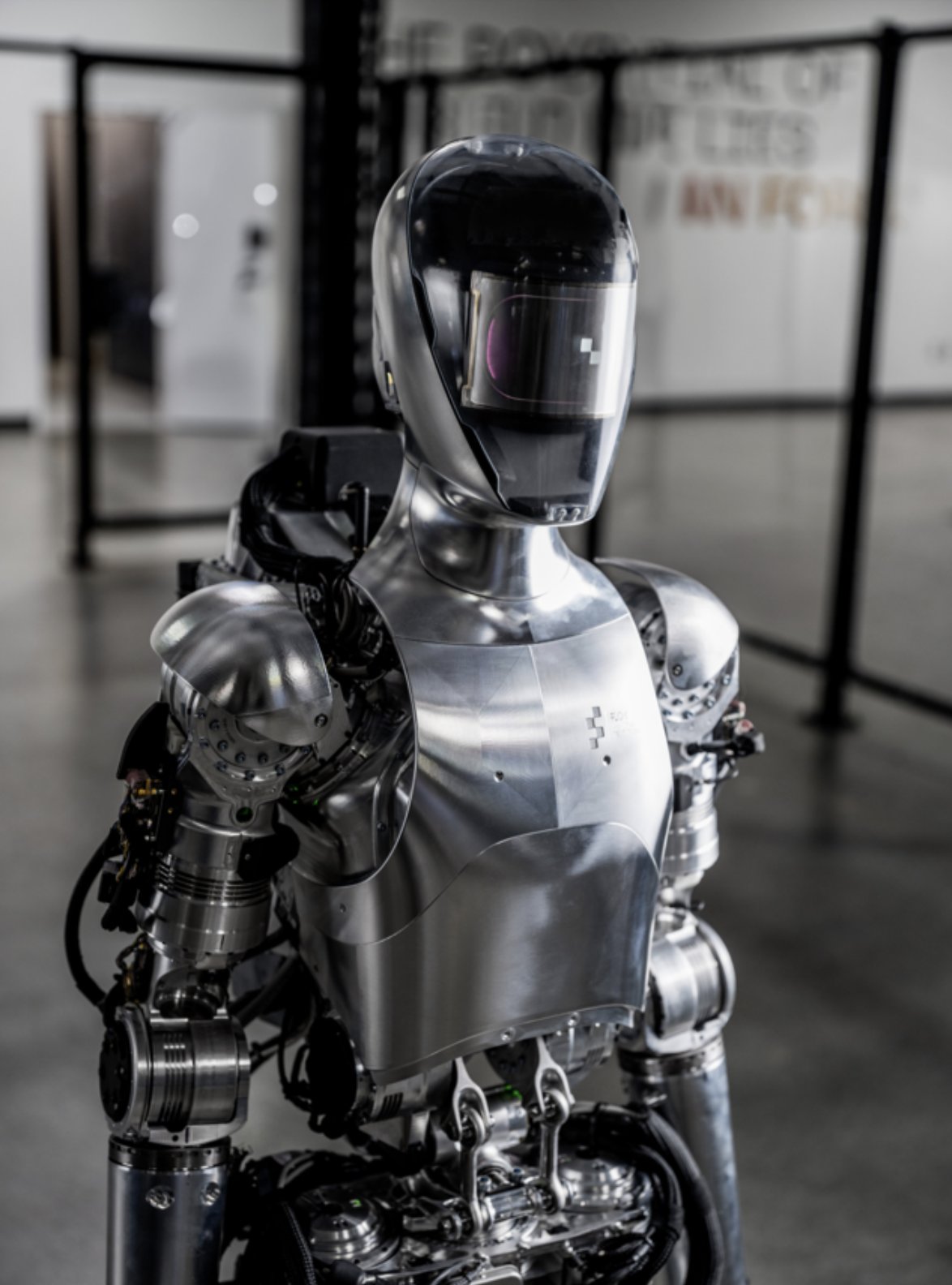
 Image Source: Figure
The round was led by Parkway Venture Capital and backed by some of the world’s biggest players—NVIDIA, Intel Capital, LG, Salesforce, T-Mobile Ventures, Qualcomm, and Brookfield Asset Management, to name a few. That lineup alone signals how seriously the tech and investment world is betting on a robot-powered future.
So what’s the plan for all that money? Figure says the cash will go into three big areas: scaling up humanoid robots for homes and businesses, building out GPU infrastructure to train its AI brain (called Helix), and collecting massive amounts of real-world human and sensory data to make sure these robots don’t just move—they understand.
Think of Helix as the nervous system of these machines. It’s designed to give robots perception, reasoning, and control in unpredictable environments. Pair that with BotQ, Figure’s expanding manufacturing arm, and the company isn’t just tinkering in labs—it’s laying the groundwork for real-world deployment at scale.
For everyday people, the pitch is simple but profound: robots that can handle tedious or dangerous tasks, support overworked staff, or even help around the house. That could mean more independence for older adults, safer workplaces, or just one less load of laundry to fold after a long day.
Of course, there are questions. What jobs might this replace? How will these machines fit into our homes and communities? And can trust keep pace with technology? Those debates aren’t going away anytime soon—but moments like this funding round make it clear the conversation isn’t theoretical anymore.
It’s easy to roll your eyes at another tech company chasing a futuristic dream, but $1 billion in backing tells us something else: powerful investors believe humanoid robots are closer than we think. And if they’re right, the way we work, live, and even rest could be reshaped faster than we realize.
Technology this big doesn’t just change industries—it changes people. The real question is whether we’ll shape it to serve us, or whether we’ll be scrambling to keep up once it’s already in our living rooms.
Source: Figure

0Comments