
 Source: Deepmind
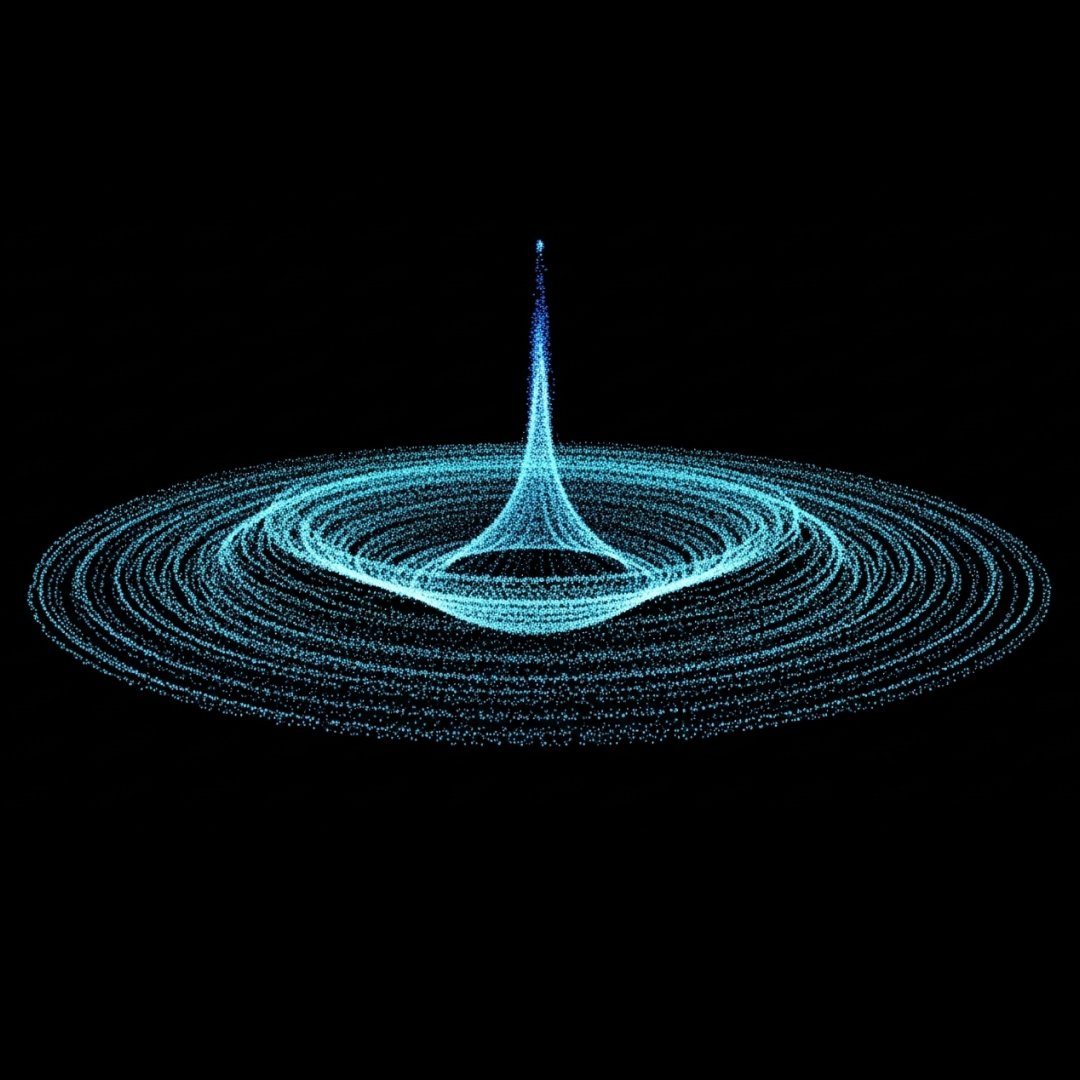
The breakthrough centers on something called “singularities.” These are moments when fluid equations go haywire—like when pressure or velocity suddenly spikes to infinity. Sounds wild, right? But these mathematical blow-ups help scientists understand the limits of physical laws. The twist? Stable singularities are thought not to exist in key fluid equations. So DeepMind went hunting for unstable ones instead.
Using AI-powered Physics-Informed Neural Networks (PINNs), the team discovered entirely new families of unstable singularities across three major fluid equations. Think of PINNs as neural networks that don’t just learn from data—they learn from the laws of physics themselves. Instead of guessing, they’re constantly checked against real-world equations, refining their accuracy to near perfection. How perfect? Imagine predicting Earth’s diameter within a few centimeters. That’s the level of precision we’re talking about.
The researchers noticed a striking pattern: the speed of these blow-ups, represented by a number called lambda (λ), lined up neatly with how unstable the solutions were. It’s like finding a hidden rhythm in chaos. This pattern showed up in two equations—the Incompressible Porous Media and Boussinesq equations—hinting that even more singularities might be waiting to be discovered.
Why does this matter to you? Because fluid dynamics isn’t just about abstract math. It’s about how your car handles in the rain, how your AC cools your home, and how your local weather forecast gets made. Better understanding these equations means smarter tech, safer infrastructure, and maybe even breakthroughs in medical science.
Yongji Wang, the study’s lead author, says this isn’t just a new tool—it’s a new way of doing math. By embedding deep mathematical insights into AI, they’ve turned PINNs into discovery engines. And with this kind of precision, we’re inching closer to solving one of the world’s most famous unsolved math problems—the Navier-Stokes singularity, a Millennium Prize Problem with a million-dollar bounty.
So yes, this is high-level science. But it’s also a glimpse into a future where AI doesn’t just crunch numbers—it helps us understand the very fabric of the physical world. And that’s a win for all of us.
Source: Deepmind

0Comments